




Market opportunities: only 10% of producers have coverage for their crop
By Carlos Alberto Pacheco
In 2019, agribusiness growth is estimated at 2%, which should produce some positive impact on GDP. Meanwhile, large tracts of arable land in Brazil remain at the mercy of their own fate. In June, when the federal government announced the launch of the Safra Plan and the consequent contribution of funds to rural insurance, there was a timid celebration by the agribusiness producers and technicians. Why?
Today, of the few more than 62 million hectares of arable land in Brazil, only 4.7 million (or 7.5%) have some kind of protection. The insured amount in 2018 totaled R $ 12.5 billion, benefiting 42,000 producers. The government wants to increase the number of beneficiaries to 150,000. Last year, the government subsidy for policy payments was around R $ 370.5 million.
For the 2019/2020 crop the government promises a subsidy of $ 1 billion, which, according to technicians from the Ministry of Agriculture, would be enough to expand the coverage area to 15.6 million hectares. In this perspective, the estimated amount for insurance subsidy should be around R $ 600 million. But, according to experts, with the contingency the value drops to $ 400 million. Producers and leaders of entities consider subsidy close to R $ 1.7 billion. One of the advantages of this addition would be the possibility of better mitigating the risk dimension in the field.
Insurers, in turn, understand that the size of the unsubsidized market points to an important ground for the government to further increase the amount made available. The reality of agricultural insurance in the country – only 10% of the areas can be protected while the United States has 90% – is still timid compared to the performance of all production chains in relation to Gross Domestic Product. Agribusiness GDP, of R $ 1.43 trillion, corresponds to 21% of the Brazilian (R $ 68 trillion).
Food safety
Considered one of the sector’s leading authorities and scholars in Brazil, Agribusiness Center of Fundação Getúlio Vargas (FGV) coordinator and former Agriculture Minister Roberto Rodrigues is an agrinsurance uncompromising defender for the big potential that remains untapped. “Agrinsurance is the ‘cornerstone’ for Brazilian agriculture”, defined former Minister Rodrigues, in a recent event in São Paulo, arguing that this form of protection stabilizes producer income.
According to Rodrigues, insurance must be backed by some instruments such as state-of-the-art technology and agro-ecological zoning. “For 40 years, I’ve been advocating field protection as an important productivity lever”, concluded Rodrigues. The expansion of agrinsurance enhances its proposal for food safety.
Rodrigues highlighted the Organization for Economic Cooperation and Development (OECD) projection that the world will need to increase its food production by 20% by 2020 to supply populations. However, this goal can only be achieved, according to the entity if Brazil increases its production by at least 40%. Is this an unattainable challenge?
For the former minister, the goal is based on three mandatory pillars: increase in tropical technology, available land and qualified human resources. “Between the 1990/91 and 2018/2019 harvests the technological expansion was extraordinary. No country in the world has achieved this in such a short time”, he amended. In the period between the two harvests, planted area grew by 66% and production by more than 300%. Regarding the challenge to Brazilian production, Rodrigues believes that the percentage can be reached, provided there is a defined “strategy”. This strategy resides in a project of his own called “A platform for Brazil”.
This platform encompasses a series of proposals, priorities and actions to make Brazil a world reference in the production chains, especially the food chain. “This is not simply a government plan. It is a state plan for 2030”, he justified. The platform defends domestic supply with quality and compatible prices. In his analysis Brazil needs to assume the position of “champion of food safety” on the planet, with the engagement of the whole society. And agrinsurance can be one of the protagonists of this process.
You may be interested

Felipe Prado Ribeiro apresenta investimentos na expansão do portfólio da Sompo no Programa Seguro
Publicação - 19 de novembro de 2026A Sompo, subsidiária da empresa responsável pelas operações de seguro e resseguro do Grupo Sompo Holdings fora do Japão, participa da próxima edição do Programa Seguro, que…

Zurich reforça agenda de equidade racial no Mês da Consciência Negra
Publicação - 19 de novembro de 2026Pessoas negras responderam por 38,3% das contratações e 34% das promoções realizadas pela Zurich Seguros entre janeiro e outubro deste ano. Atualmente, profissionais que se autodeclaram pretos…

Tokio Marine doa 3,7 toneladas de alimentos para famílias afetadas pelas chuvas em Santa Catarina
Publicação - 19 de novembro de 2026A Tokio Marine realizou recentemente ação de apoio humanitário para auxiliar comunidades afetadas pelos eventos climáticos na cidade de Lages, Santa Catarina. A iniciativa prevê a doação…
Mais desta categoria
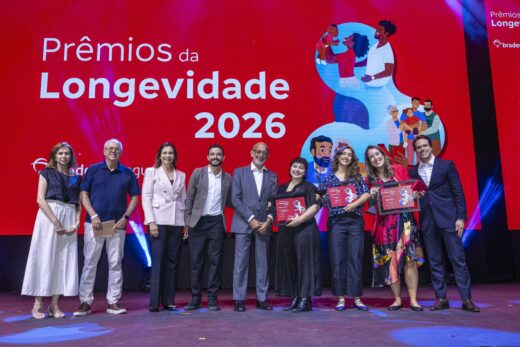
Grupo Bradesco Seguros reúne especialistas na 19ª edição do Fórum da Longevidade para debater novos horizontes sobre viver mais
Publicação - 19 de novembro de 2026
Fenaprevi abre inscrições para prêmio de educação sobre seguros de vida e previdência privada aberta com R$ 35 mil em premiações
Publicação - 19 de novembro de 2026
AXA conquista certificações globais por seu compromisso com a remuneração justa e equitativa
Publicação - 19 de novembro de 2026
CAPEMISA Capitalização e Tá de Pé Viagens conectam turismo e incentivo em nova parceria
Publicação - 19 de novembro de 2026Mais lidas


Dive In Festival no Brasil
19 de setembro de 2020
Corretores Conectados para vencer*
9 de setembro de 2020
Qualicorp promove live sobre diversidade e valorização humana
29 de setembro de 2020